Recently, a Japanese electronics manufacturer asked CLP to propose the fees and costs for a comprehensive patent license enforcement campaign aimed at improving revenue collection. CLP proposed an alternative fee arrangement that included both flat fee installments and a contingency on any recovery obtained (the “Alternative Fee Arrangement” or “flat fee agreement”). The proposed flat fee agreement covered legal services through, but not extending beyond, trial. During the negotiation of the agreement, the client raised an interesting question:

Should CLP’s "flat fee" include post-trial motions, appeals, new trials, and/or the enforcement of the judgment?

Initially, we felt that there were too many reasons that an alternative fee firm would want to avoid agreeing to a flat fee that covered post trial legal services at the outset of the litigation.

On reflection, however, the question of what activities should be included under the flat fee umbrella was not an easy one. For many reasons, a flat fee firm may want to negotiate up front for its fixed or contingency fees to cover post-trial work.

CLP ultimately decided to include some (post-trial motions), but not all (appeals, new trials, enforcing the judgment), post-trial work under its AFA, despite the risks. Why (or why not)?
Continue Reading Should a Flat Fee Include Post Trial Work?

The negotiation of an alternative fee, even if unsuccessful, provides the client with valuable feedback on their case.  As discussed by Cisco litigation manager Neal Rubin on Legal OnRamp:

[C]ounsel’s willingness (or unwillingness) to share the risks and rewards of litigation can help the client assess the strengths and weaknesses of its case. . . . [A] firm’s willingness to accept risk provides a useful litmus test that can help instruct the client whether it has realistically assessed the strength of the case. The straight billable hour model provides no such feedback.

We find ourselves applying this litmus test to a potential IP enforcement matter.  The results suggest the client may not have the strong case it thought it did, and that the engagement will crater.  So how did we get to this point, and what good can come from the possibility that we may lose the engagement?

Continue Reading Willingness to Flat Fee is a Litmus Test

As discussed in E-Discovery: Taiwan Collection on a Shoestring, CLP recently faced the challenges of cutting the discovery costs of a Taiwan based wireless communications device manufacturer with a popular new technology under dispute with a competitor.

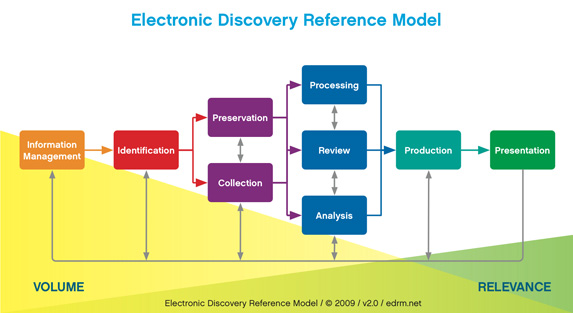
For cost sensitive clients, containing discovery costs obviously requires reducing the overall volume of documents that will be collected, uploaded, processed and produced. If one looks at the Electronic Discovery Reference Model, ("EDRM”), the industry standard for approaching discovery,you will quickly realize that the most effective way to cut total costs along the discovery pipeline is to decrease the input during collection. 


With our client, we knew our end goal was to decrease the number of irrelevant documents we collected. The most cost effective way of limiting the collection, we decided, was to work with the person most knowledgeable about the documents on the custodian’s workstation— the custodians themselves— to make a targeted collection instead of a full replica of the hard drive.

The challenge, then, was how to effectively work with Taiwanese custodians when travel costs to Taiwan could be 3k an attorney.

Continue Reading Cutting Discovery Costs With Remote Foreign Custodian Interviews

Adam Smith Esq. recently discussed a major obstacle to setting a fixed price for litigation: trust.

Sadly, for too many of us, clients don’t trust us with their money and we don’t trust them to reward us fairly.

The view from here in the trenches of flat fee IP litigation is that the trust issue is really about determining what a case is worth to a client.  In order to flat fee a project, you have to be willing to step off the cliff with your client.

The client is never going to agree to a flat fee unless it is convinced the amount invested in legal services (the flat fee) will generate an appropriate return on the investment.   The ROI determination, in turn, is based on the determination of what it is worth to the client to enforce its IP or defend claims brought by others seeking to enforce their IP.  This brings us to the trust issue, and our first  insight:

In our experience, the flat fee lawyer has no choice other than to

Continue Reading Trust your client’s instincts

The lower costs and cost certainty attributable to flat fee IP litigation has, unexpectedly but not unsurprisingly, appealed not only to traditional consumers of IP litigation, but created a market of small, often foreign, high tech companies who never before could afford top quality IP legal services.

With that said, according to Dean Gonsowski of EWeek.com,

Pre-trial discovery expenses alone now represent 50 percent of litigation costs in an average case [and i]n situations where discovery is actively used, it could represent as much as 90 percent of litigation costs, approaching and perhaps exceeding $1 million on a single case.

So what we – at CLP – quickly discovered was that it was not enough to keep attorney fees in check, we needed to re-think the way law firms conduct discovery to cut the total costs drastically for clients.

Recently CLP represented a Taiwan based wireless broadband communications device company. The company had only 4 full time employees, but a promising technology that made it the target of an IP suit from a competitor. One of our early challenges, therefore, was to collect documents from work stations and peripheral devices of employees in Taiwan under a budget that would allow the cash poor company to defend itself and eventually realize its forecasted profitability.  Early estimates from vendors were around 9-12k.

We eventually figured out how to do it for 3k.

How?

Continue Reading E-Discovery: Taiwan Collection on a Shoestring

John Maynard Keynes’ quote "in the long run we are all dead" rejected the notion that inflation would control itself absent government intervention in the short term.  It has equal application to flat fee pricing of litigation, where, for many clients, all that matters is what the lawyer is doing (and charging) “today,” because there is no “tomorrow.”

We do not dispute that "the fixed fee can be split into segments," (as stated most recently in Adam Smith, Esq.) but clearly some segments (the first!) are far more important than others.

Many early adopters of Confluence Law Partners, CLP’s flat fee IP litigation model are smaller sized technology companies that can’t afford the high cost of hiring hourly billing IP litigators.   These clients care little about the price of the entire litigation, not because their matters are expected to conclude any earlier or are easier to resolve than a typical IP litigation, but due to the limited amount of money available to spend on lawyers.

The client mindset is that it is OK to bail on the litigation, and that their lawyers should be ready at any time to help them implement this action – even if they’ve previously failed to share this strategy with counsel.

So what is the best approach to setting a fixed price?

Continue Reading Setting a fixed price: focus on the short term